Since the 1979 Islamic Revolution, Iran’s Ministry of Culture and Islamic Guidance (Ershad) has overseen the licensing of recorded music. To be manufactured and sold legally, albums must obtain a publication license that reviews lyrics, music, and artwork for conformity with cultural and religious rules. For decades, official distribution focused on Iranian traditional/folk and a narrow band of sanctioned pop, while many “Western” styles were excluded from legal release. This policy shaped opportunities for domestic artists and for the Iranian diaspora—especially Los Angeles–based singers—who were routinely denied publication licenses.
Live performance access was also limited: foreign artists rarely appeared after 1979, and even preliminarily cleared events could be canceled late. In retail, authorities periodically tightened enforcement—e.g., hologram stickers—to curb piracy and keep only licensed titles on shelves, while listeners often turned to bootlegs, downloads, satellite TV, and later unlicensed streaming. A few exceptions—such as some non-U.S. foreign compilations and edited Iran-market editions of foreign catalog titles—appeared but did not signal a broad opening. Before 2012, no comparable artist-led, full-album approval for a foreign-recorded U.S. studio release had surfaced in the public record.
Long before this American milestone, Iranian musicians spearheaded cultural diplomacy through global tours. Concerts such as the Masters of Persian Music series—featuring luminaries like Mohammad‑Reza Shajarian, Kayhan Kalhor, and Hossein Alizadeh—introduced Persian classical traditions to international audiences, beginning with European dates in 2000 and a North American tour in early 2001, laying vital groundwork for later cross‑cultural exchange.
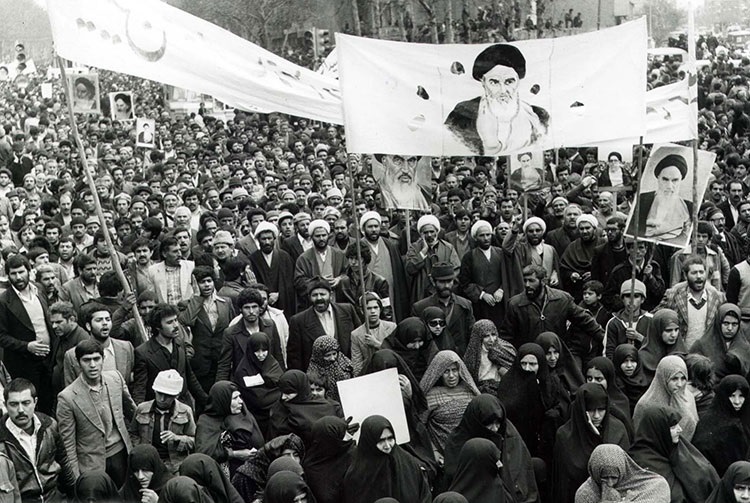
Tehran Ashura Demonstration, 11 December 1978. A large crowd of people demonstrating in Tehran during the Ashura demonstrations.
Documentation: 2012 correspondence from Ābnous Art & Music Institute (Shiraz) confirming Ershad publication license approval for Rāz‑e Khāmūsh (“Raze Khamosh”); available on request (redacted).
Since 1979, Iran’s licensing regime treated much Western—especially American—music as unacceptable and routinely refused members of the Iranian diaspora abroad (notably Los Angeles–based Iranian diaspora pop singers) for publication. Contemporary foreign studio releases were effectively shut out; the few exceptions that surfaced were typically non-U.S. acts, compilations, live recordings made inside Iran, or edited Iran-market catalog editions—not artist-initiated approvals for complete foreign-recorded studio albums.
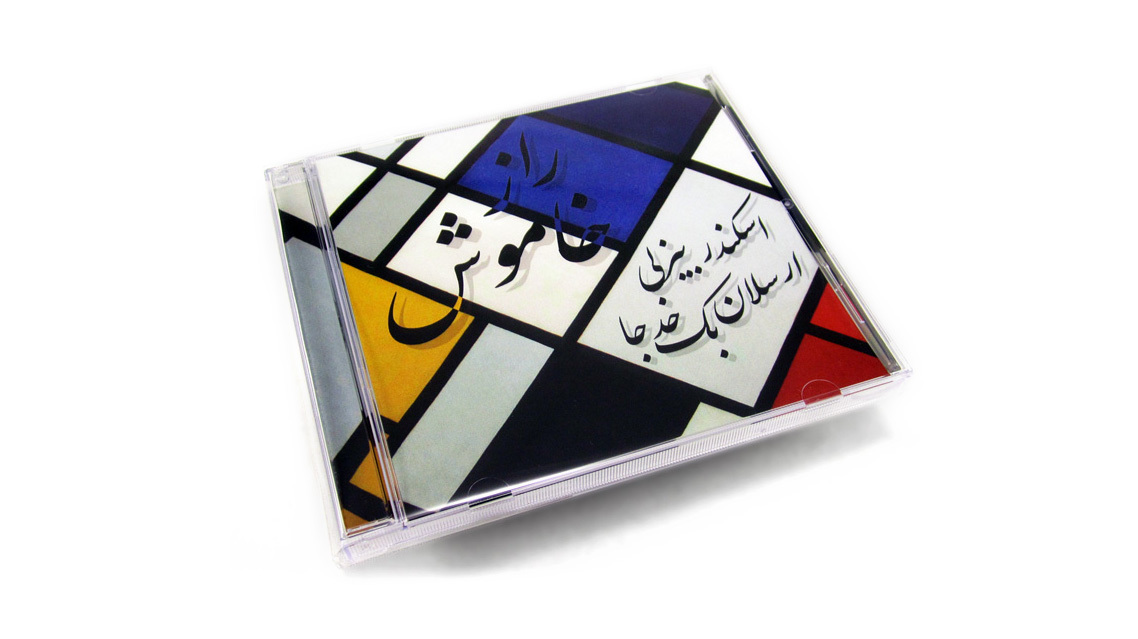
Against that backdrop, in 2012 American musician Alexander Beasley received an Ershad publication license for Raze Khamosh (Mystery of Silence)—an unprecedented, artist-led full-album approval for a foreign-recorded U.S. studio release in post-1979 Iran. The album was recorded in 2011 in Bishkek, Kyrgyzstan and co‑created with Tajik musician Arslonbek Khodjaev (robab, percussion).
Shiraz coordination. On the Iran side, producer-educator Shahram Momtahen (director/manager, Ābnous (Abnous) Art & Music Institute) coordinated the submission and kept the application moving through the Music Office.
The review. Officials raised two hurdles—an informal fifty-minute runtime expectation for instrumental albums and a request to list Iran as the recording location. Ershad granted the license despite those objections. That ruling established the precedent: a U.S. artist’s foreign-recorded studio album cleared publication review despite longstanding exclusions.
Outcome. The approval coincided with tightened international banking sanctions, the EU oil embargo, and a sharp depreciation of the rial in 2012—measures that constricted payments, imports, and unit economics and made manufacturing and distribution untenable; domestic production and retail therefore did not proceed. Not long afterward, unauthorized copies appeared on Persian-language sites alongside other classical releases.
Alexander Beasley performing kamancheh at the University of Washington, Seattle, Nov. 16, 2013.
Alexander Beasley is an American musician and director of the travel docu‑series No Expectations (in post‑production; seeking distribution). A multi-instrumentalist on kamancheh, setar, oud, daf, and dayereh, he focuses on improvisation and innovation within Persian music. He began in 2006—a turning point that deepened his engagement with Persian and Central Asian musical traditions. Across his work—from the fully improvised studio album Raze Khamosh (Mystery of Silence) to the cross-cultural TV series No Expectations—the throughline is cultural diplomacy: using creative exchange to build understanding. His work is inspired by Persian masters such as Hossein Alizadeh—himself noted for innovation and co‑founder and composer with the "Masters of Persian Music" ensemble—reflecting a deep respect for tradition combined with creative exploration.
Masters of Persian Music. Left to right: Kayhan Kalhor, Mohammad-Reza Shajarian, Homayoun Shajarian, Hossein Alizadeh. Concert in London, November 2005. Photo by Khashayar Karimi.
Raze Khamosh (Mystery of Silence) is a fully improvised dialogue between Alexander Beasley’s kamancheh and Arslonbek Khodjaev’s robab, with sparse percussion. Rooted in Persian classical modal practice yet colored by Central Asian timbres, it moves through long‑breathed, contemplative spaces and suddenly uplifting, spontaneous turns—often with an air of mysticism. This improvisational design and its alignment with Persian melodic practice helped it resonate with cultural reviewers and clear publication scrutiny despite being recorded abroad.
The album’s title and concept were inspired by Rūmī—he writes:
"Why are you so afraid of silence, silence is the root of everything. If you spiral into its void, a hundred voices will thunder messages you long to hear."
— Jalāl ad-Dīn Muḥammad Rūmī. Translation by Maryam Mafi & Azima Melita Kolin.
Since Beasley’s 2012 approval, no other comparable artist-led, full-album approvals of this kind have surfaced in the public record. A distinct milestone occurred in 2015, when jazz composer Bob Belden brought his band ANIMATION to perform at Tehran’s Fajr International Music Festival—the first appearance by American musicians in more than 35 years. They recorded a live album in Tehran, (a different category from foreign-recorded studio releases), partially funded by Iran’s culture ministry, released as a co-production between U.S./U.K. label RareNoise Records and Iranian label Hermes Records.
Beasley’s approval remains a landmark: amid 2012 sanctions, an American studio album passed Iran’s publication review—once thought impossible since 1979. More broadly, it underscores how artist‑led cultural diplomacy can open modest, durable channels of exchange even when formal policy remains closed. He continues this work selectively through lecture-concerts, campus residencies, artist collaborations, and his in-progress docu-series No Expectations, which explores cultural identity, resilience, and everyday life through the lens of cultural diplomacy.
The invitation is open: continue the work of cultural diplomacy through the arts, keeping dialogue alive when official channels narrow.
For host institutions, a brief program outline for lecture‑concerts and residencies can be found at Booking & Residencies.
1. Shahnaz, "Pride of the Shah" - 7:37
2. Falaq, "Twilight" - 4:14
3. Del Be Del, "Heart to Heart" - 3:15
4. Parvaz, "Sudden Flight" - 3:04
5. Raze Khamosh, "The Mystery of Silence" - 5:30